
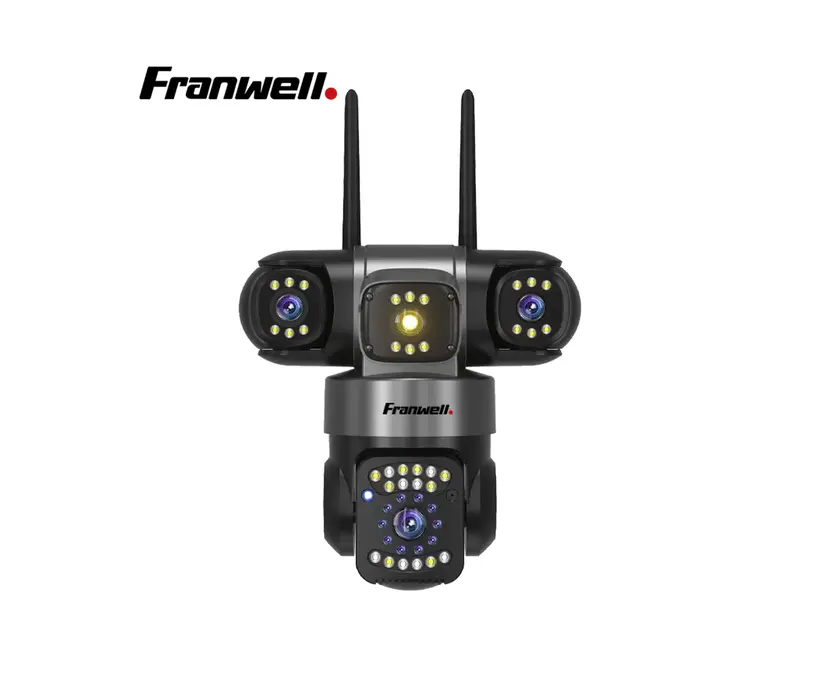
More lenses can cover more directions, but placement still matters. Define the most important view first, then decide whether a second or third simultaneous angle is useful.
Single lens: one clear priority
A single-lens camera is often enough for a doorway, room, counter, narrow passage or other focused area. A fixed lens watches one direction, while a pan-and-tilt model can be moved remotely when supported.
Remote movement is useful for checking different directions, but it does not record every direction at the same moment. Keep the resting position aimed at the highest-priority area.
Dual lens: overview plus another angle
Dual-lens designs can combine a fixed overview with a movable view, or provide two different directions. This can reduce blind spots in wider shops, exterior walls and parking approaches.
Check whether both views can be watched and recorded as expected. Do not assume every dual-lens model has identical movement, resolution or app behaviour.
Triple lens: wide areas with several priorities
Triple-lens cameras may suit broad open areas where several directions matter at the same time. They can be useful at warehouses, yards or building exteriors, but they are not a substitute for good mounting height and lighting.
For important evidence, two well-positioned cameras can sometimes be more useful than one camera trying to cover everything. Consider face direction, backlighting and the distance to the target area.
Draw the coverage before buying
A simple site sketch makes lens selection easier.
- Mark entrances, exits and valuable areas
- Draw the main viewing direction
- Note walls, shelves, trees and parked vehicles
- Estimate subject distance during day and night
- Decide which angles must be recorded simultaneously
Compare the models that fit your site
Choose the connection and power first, then compare coverage and functions.